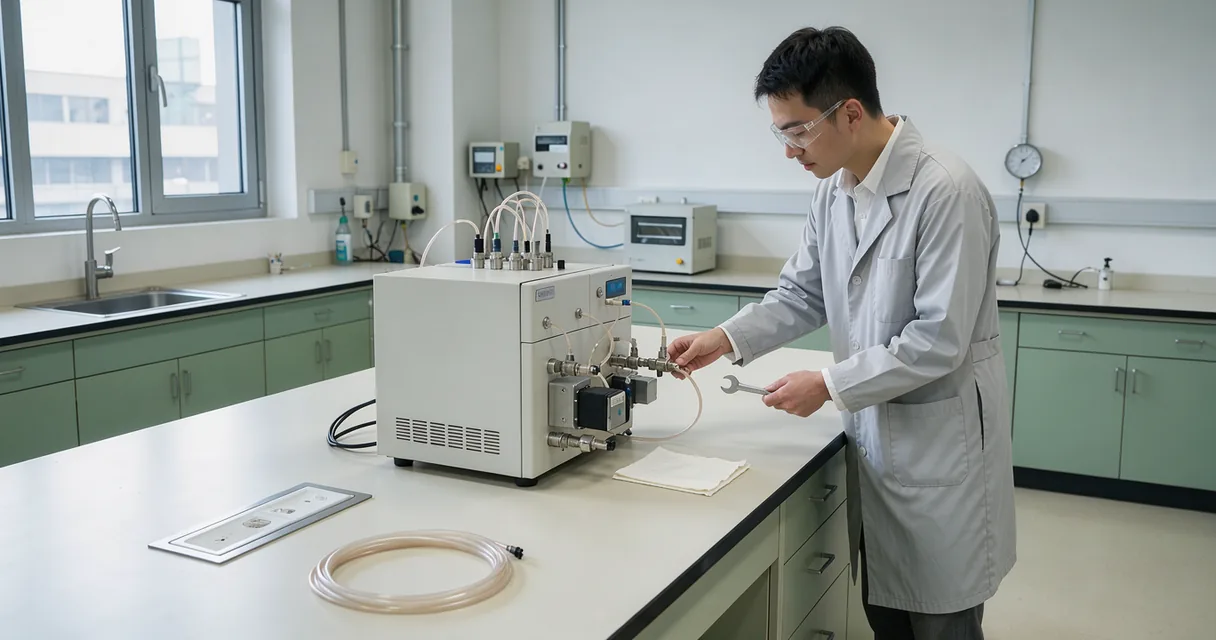
Melanotan 2, with the label peeled back
“Direct” sounds reassuringly simple. The product tests tell a messier story: even the quantity printed on the label could fail inspection.
The claimed amount and the measured contents
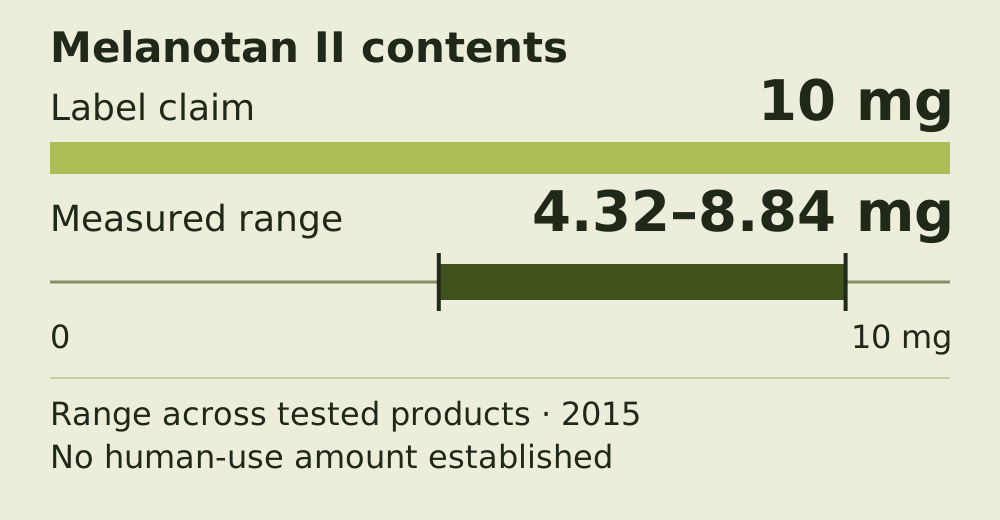
I began at the printed quantity. A 2015 analysis of online Melanotan 2 products found 4.32–8.84 mg of the peptide where each shop claimed 10 mg. Products from two of three shops also contained unidentified impurities, measured at 4.1–5.9%.
Those are unusually concrete findings in a subject crowded with impressions. Liquid chromatography separates a mixture into its components; mass spectrometry helps identify them. Here, the instruments supplied an awkward answer to an apparently simple question: how much of the named substance was actually present?
To me, “direct” earns its place only after that question. A short route from a website to a parcel leaves the chemistry unresolved.
Melanotan II and MT2
Melanotan II, MT-II and MT2 name the same synthetic peptide. Hadley and Dorr’s history of melanocortin therapeutics traces the work at the University of Arizona, where the cyclic molecule was designed in the late 1980s to mimic the pigment-stimulating hormone alpha-MSH.
The family resemblance gets confusing quickly. Melanotan 1, also called afamelanotide, has its own sunlight studies and approval. Bremelanotide, or PT-141, was developed from the Melanotan II scaffold for sexual function. I resent how casually “melanotan” gets used for all of them: it lets a useful result for one molecule drift onto another.
The 2024 forensic identification paper brings the naming problem back to physical material. Product identity needs laboratory work. Similar spelling supplies very little reassurance.
Pigmentation and reported harms
The skin story extends to moles. Published examinations recorded changes in existing moles under dermoscopy, and a 2026 case report described pigmentation of the gums and inner cheeks after Melanotan II use.
I give that mouth report particular weight as a question, rather than a prediction: how far does the pigment response extend? It follows one man and cannot establish a frequency. The small tanning trial showed darker skin in two of three men; the later clinical reports make a simple cosmetic description feel inadequate.
The reports of muscle breakdown and kidney injury and prolonged painful erections add a much more serious reason to look past colour. The side effects page examines those accounts and the unresolved long-term risks.
Inspection notes
An amount, a tan and an approval each answer a different question. The dosage and half-life page examines the quantities used in studies and the missing human clearance measurement. Tanning and sunlight follows the larger photoprotection results back to afamelanotide. Mechanism of action explains why a pigment signal can also reach appetite and sexual response.
My strongest objection is to the certainty of the shortcut. Melanotan 2 has no approved use and an unsettled long-term safety record. The research contains real biological activity, small human experiments and serious reported harms. An attractive label can compress all of that into a few reassuring words; the actual record takes more room.